Foraging Pittsburgh

Wild Food Walks, Workshops, & Guided Nature Hikes


Leave a comment

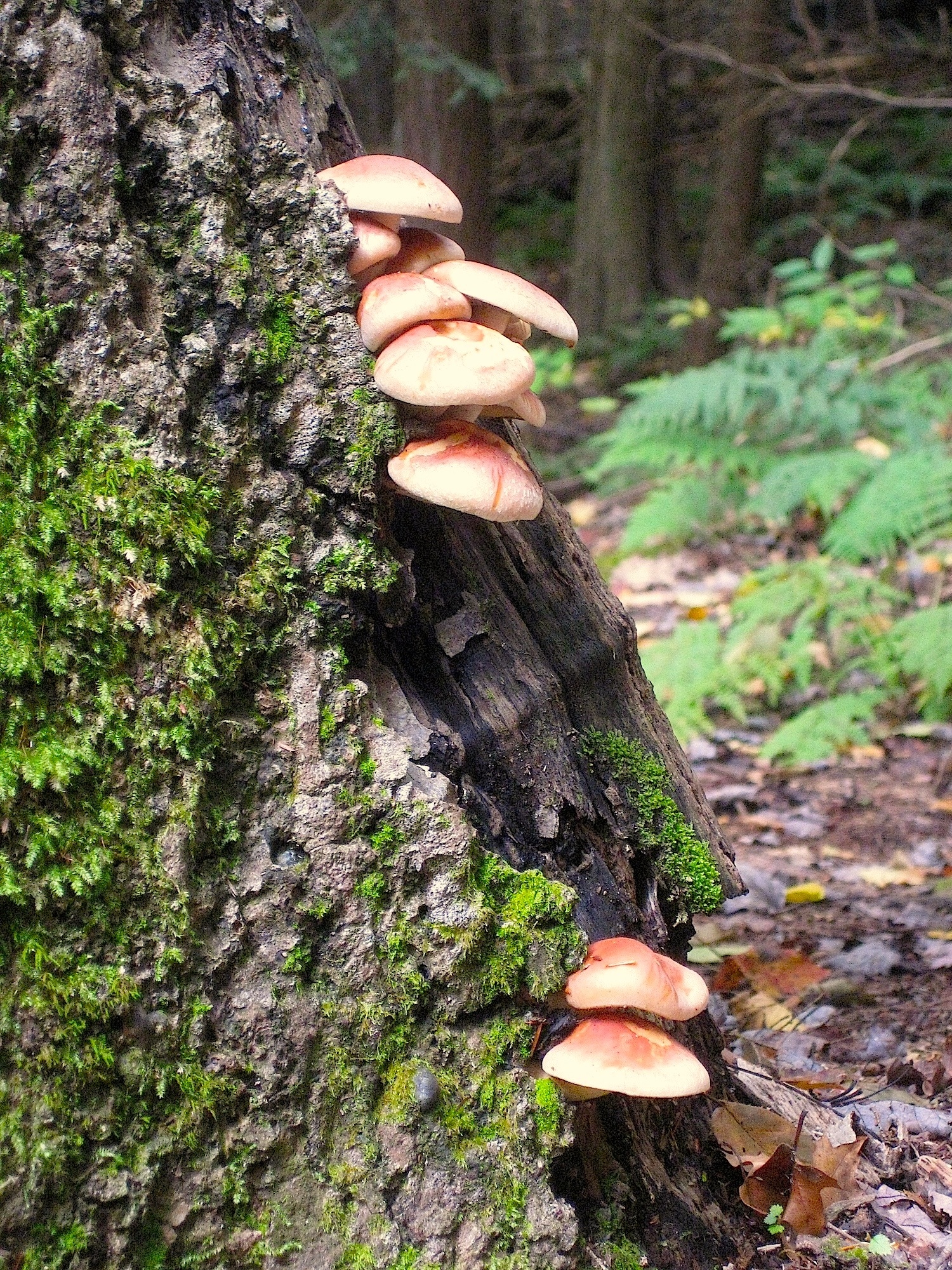
Brick cap mushrooms, Hypholoma sublateritium, in Pennsylvania

brickcapswildfoodism

Don’t hang your basket up for the year just yet … many mushrooms can still be found in the Northeastern United States (in fact, even in January you can find me mushroom hunting).

These are brick caps (Hypholoma sublateritium) – edible mushrooms that improve in taste as the year progresses. They can usually be found in the autumn months through winter, though they become less bitter generally after the first frost.

This is not a beginner’s mushroom. Brick caps resemble sulfur tufts (Hypholoma fasciculare), poisonous mushrooms that grow within the same season (I found sulfur tufts not too far from this spot).

Both grow in clusters on decaying wood and produce purple-brown spore prints, though brick caps have reddish caps (paler at the margins) with grayish-purplish brown gills, and sulfur tufts usually have greenish yellow caps with greenish yellow gills (becoming darker with age).

This picture was taken in October, though I am still finding brick caps on stumps here in western Pennsylvania.  Sure, they may be frozen.  Harvest them (if you’re absolutely positive they are indeed brick caps), take them home, and they will thaw in no time.

There are many things for which I am grateful in life … cold-loving fungi definitely make the list.
1 Comment

Turkey Tail Mushroom And Its Medicinal Benefits

turkeytaillogwildfoodism

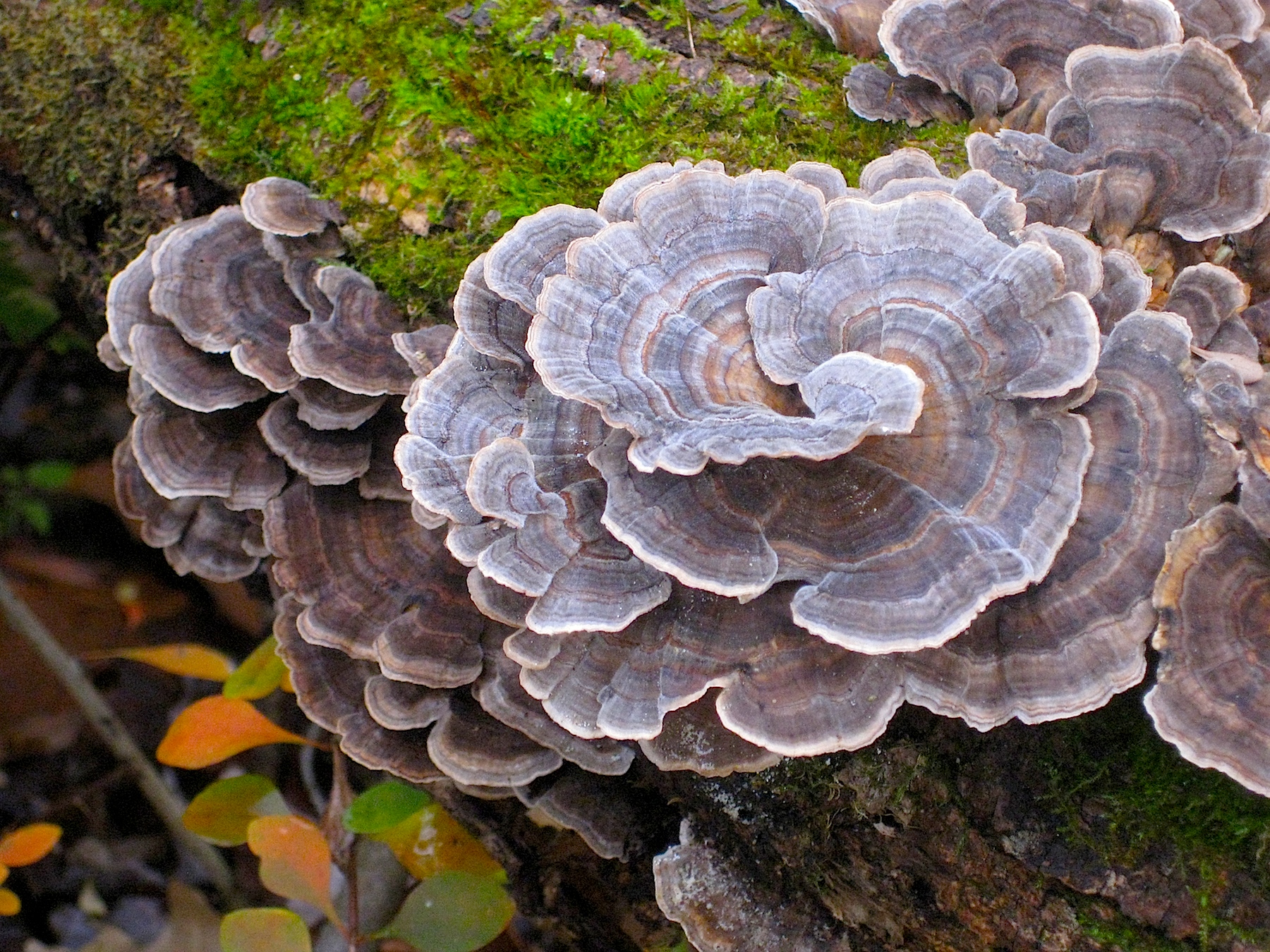
One particular fungus really begins to shine this time of year when hardly a mushroom wishes to poke its fruiting body from the earth. I am referring to the aptly named Turkey Tail fungus (Trametes versicolor).

Turkey Tail is not difficult to locate, as it’s one of the most ubiquitous fungi found in our woodlands. Look around at the logs, stumps, and fallen branches in your neck of the woods – and you may eventually discover Turkey Tail. It’s not necessarily edible (too tough), though it sure is medicinal.

One particular study found that Turkey Tail can improve immune system status in immuno-compromised breast cancer patients following conventional cancer treatment (Torkelson et al., 2012). These findings are extremely important, as the study was not conducted on animals, nor in petri dishes, but rather on living human subjects.

A more recent human trial (again – not in animals, nor in petri dishes) found that a polysaccharide extracted from Turkey Tail mycelia displayed prebiotic effects in the human microbiome (stimulating the growth and maintenance of beneficial intestinal bacteria). In the same study, participants who were instead fed Amoxicillin (an antibiotic) demonstrated detrimental shifts towards more pathogenic bacteria in their microbiome, with effects lasting up to 42 days after their final antibiotic dose (Pallav et al., 2014).

Antibiotics are among the most commonly prescribed drugs used in conventional medicine. According to the CDC, up to 50% of all antibiotics prescribed are not needed or not optimally effective. The threat of antibiotic overuse is massive, of which the worldwide problem of antibiotic resistance is but one manifestation. Additionally, Clostridium difficile infections are on the rise due to overuse of antibiotics, leading to numerous preventable deaths.

A wise first-line strategy would be to optimize our intestinal flora as best we can, and it seems that Turkey Tail may be able to help. Its medicine is easy to acquire. Hot water decoctions can be created and sipped as a tea, or simmered in broth and consumed as a soup. Additionally, dual extractions can be created, first in alcohol, then in hot water, and finally combined.

Turkey Tail is a great mushroom to hunt in the late autumn and winter months. While there are look-alikes, most are benign. Happy fall foraging!

(Photo taken November 1st in western Pennsylvania)


Leave a comment

Harvesting Wild Cranberries In Pennsylvania

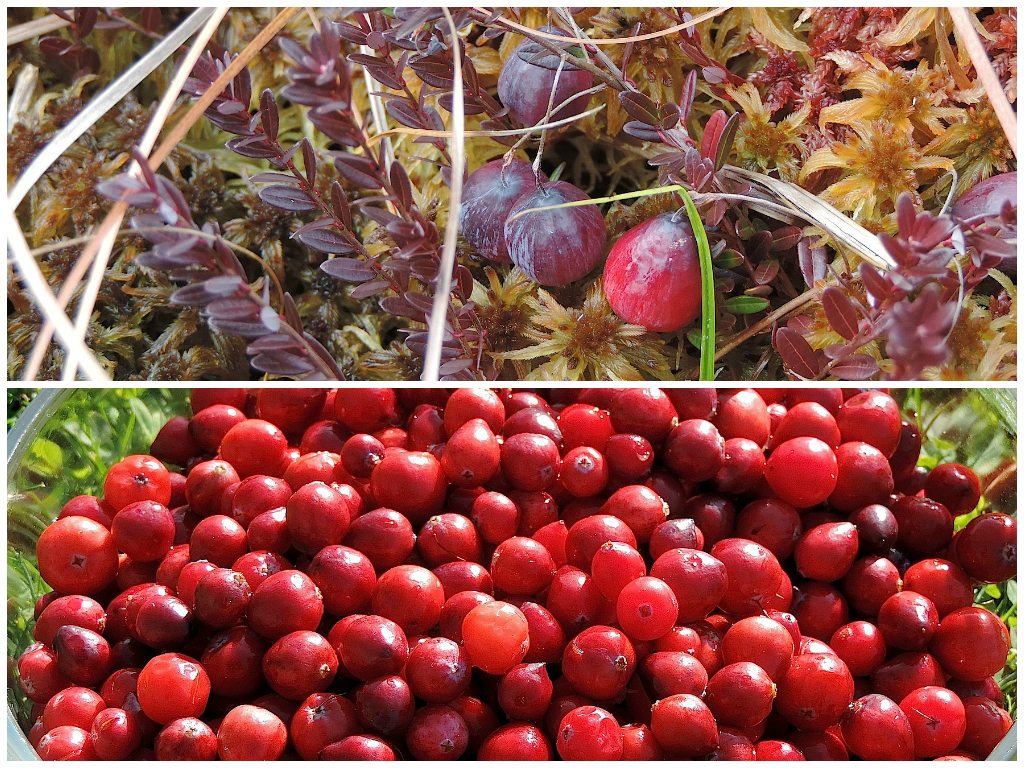
wildcranberrycollage

A particular sphagnum bog is a yearly destination of mine in the autumn months. What could be the attraction, you might wonder, of a place so swampy and sodden?

Besides the acknowledgement and appreciation of a habitat so seemingly open and sparse, I head to the bog so I may harvest one of my favorite fall fruits … wild cranberries.

Cranberries (Vaccinium macrocarpon) were a favorite food of the people who inhabited Pennsylvania centuries ago, including the Lenape and Shawnee Natives, though today it seems their presence in the wild has been forgotten. Interestingly, along with blueberries and Concord grapes, the wild cranberry is one of the few native fruits widely grown in cultivation today.

If you’ve never experienced the thrill of locating and harvesting wild cranberries, I can offer some tips:

• Wild cranberries, characteristic of other members of the heath family (Ericaceae), inhabit slightly acidic bogs, swamps, peaty wetlands, and occasionally poorly drained meadows. In other words, they frequent wet lands.
• October and November are great months to harvest wild cranberries, though the fruits can still be found into the late winter months (sometimes frozen, sometimes thawed … still delicious).
• The cranberry plant is a trailing evergreen shrub, laying very low to the ground. Its leaves this time of year are reddish-purple. When looking for the fruits, walk slow and keep your eyes down, as it’s very easy to step on or walk right past the cranberries.

It’s not too late to harvest wild cranberries! I only harvested a fraction of the total amount available (a good foraging practice), leaving some for the bear, rodents, birds, deer, and of course … you.


Leave a comment

Maitake Mushroom For Inflammatory Bowel Disease

maitakeIBDwildfoodism

Colono-protective … is that even a word? The maitake mushroom don’t care, because it knows what it is … colono-protective, or demonstrating protection against inflammation and ulceration of the colon.

Research from Experimental & Molecular Medicine (2009) found that a maitake mushroom water extract ameliorated colon inflammation in animals by suppressing production of TNF-alpha, an inflammatory response promoter involved in IBD (inflammatory bowel disease). According to the researchers, “The results strongly suggest [maitake water extract] is a valuable medicinal food for IBD treatment, and thus may be used as an alternative medicine for IBD.”

I’d like to see the “alternative” status promoted to “primary,” and perhaps if future research demonstrates similar results, we’ll see this shift happen.

For now though, it’s quite easy to produce similar medicine at home. Decoct a few tablespoons of maitake in hot water, strain, and enjoy as a hot tea. Additionally, maitake can be incorporated in soup stocks, allowing its medicine and rich flavor to become extracted over several hours of simmering.

By the way, if you’re interested in harvesting maitake mushrooms (Grifola frondosa for the Linnean crowd), they’re one of the “safer” fungi inhabiting our forests in western Pennsylvania (though their season is just about over this time of year). For more information, check out http://wildfoodism.com/2014/10/07/5-easy-to-identify-edible-mushrooms-for-the-beginning-mushroom-hunter/


Leave a comment

Autumn Medicine – Yarrow (Achillea millefolium)

yarrowwildfoodism

Autumn is in full force, and while this season is typically associated with the senescing of flora, if we look closely we will also notice a yang to this season’s yin: the blossoming of autumn wild flowers.

This is yarrow (Achillea millefolium), an herbaceous perennial that can be found flowering typically from June through September in Pennsylvania. If you look carefully, and if the conditions are right, you can still find yarrow in flower amongst the autumn foliage through November.  This photograph was taken in western Pennsylvania in late October.

Several traditional uses have been attributed to yarrow by cultures from all over the world, the most common including the treatment of skin issues, respiratory illnesses, digestive problems, tooth aches, and eye problems. Most of the studies on yarrow have been either animal or in vitro (think petri dish/test tube) experiments, and in these studies yarrow has been shown to demonstrate antibacterial, anti-inflammatory, gastroprotective, and blood coagulation inducing effects (Applequist et al., 2011).

Few, if any, human clinical trials have been conducted on yarrow, though this current reality does not render the herb’s medicine ineffective. Contemporary advice is best viewed through multiple channels, traditional use and modern research being two of them. Too often, we rely on the latter at the expense of the former (low fat diets anyone?), and are left with an unbalanced projection of reality.

But anyway, look for yarrow in fields and roadsides, from now until who really knows when … (I’m not the creator, just a messenger).


Leave a comment

Leached Acorns, Porridge, Workshops, Etc.

acornjarwildfoodism

This year’s first batch of acorn meal is ready to go!

The acorns I processed were gathered from the chestnut oak (Quercus prinus), a species of white oak that, comparatively speaking, contains a rather high level of tannins. To bring this level down, I cold-leached the acorns for 10 days, decanting the water about 2 times per day (sometimes 3). The remaining meal went into the dehydrator on a low setting and dried sufficiently within 5 hours.

I’ve already made my famous (well okay, only to me) wild porridge with serviceberries, crab apples, and maple syrup, and it was a most satisfying breakfast. Just what I needed after pullups, incline chest presses, and barbell shrugs.

It’s not too late to harvest acorns! Many from the white oak group are sprouting as you are reading this (they like to do that in the autumn), though the acorns from the red oak group can still be found ungerminated.

If you’d like to learn more about acorn harvesting and processing, consider joining me for an outdoor class on this very topic, on Saturday, November 15th. It’ll be a great time, for sure!

TheAcornForager


Leave a comment

Acorn Harvesting And Processing Outdoor Class Near Pittsburgh

chestnutoakacornswildfoodism1

Acorns are a fantastic food … when they are processed properly.  If you’ve ever wondered how to turn these puckery nuts into their tasty, nutritious alter-egos, consider joining me for an outdoor class on Saturday, November 15th.

I’ll be discussing the ins and outs of acorns … which ones to gather, several leaching methods, drying and storing methods, recipes, and more (I’ll also be sure to point out some of the autumn wild edibles nearby)!  The outdoor class will take place in the North Hills of Pittsburgh, about 12 miles north of the city.  For more information, and to watch a personal video invitation, check out the events page here:  https://foragingpittsburgh.com/events

It would be great to see you there!


Leave a comment

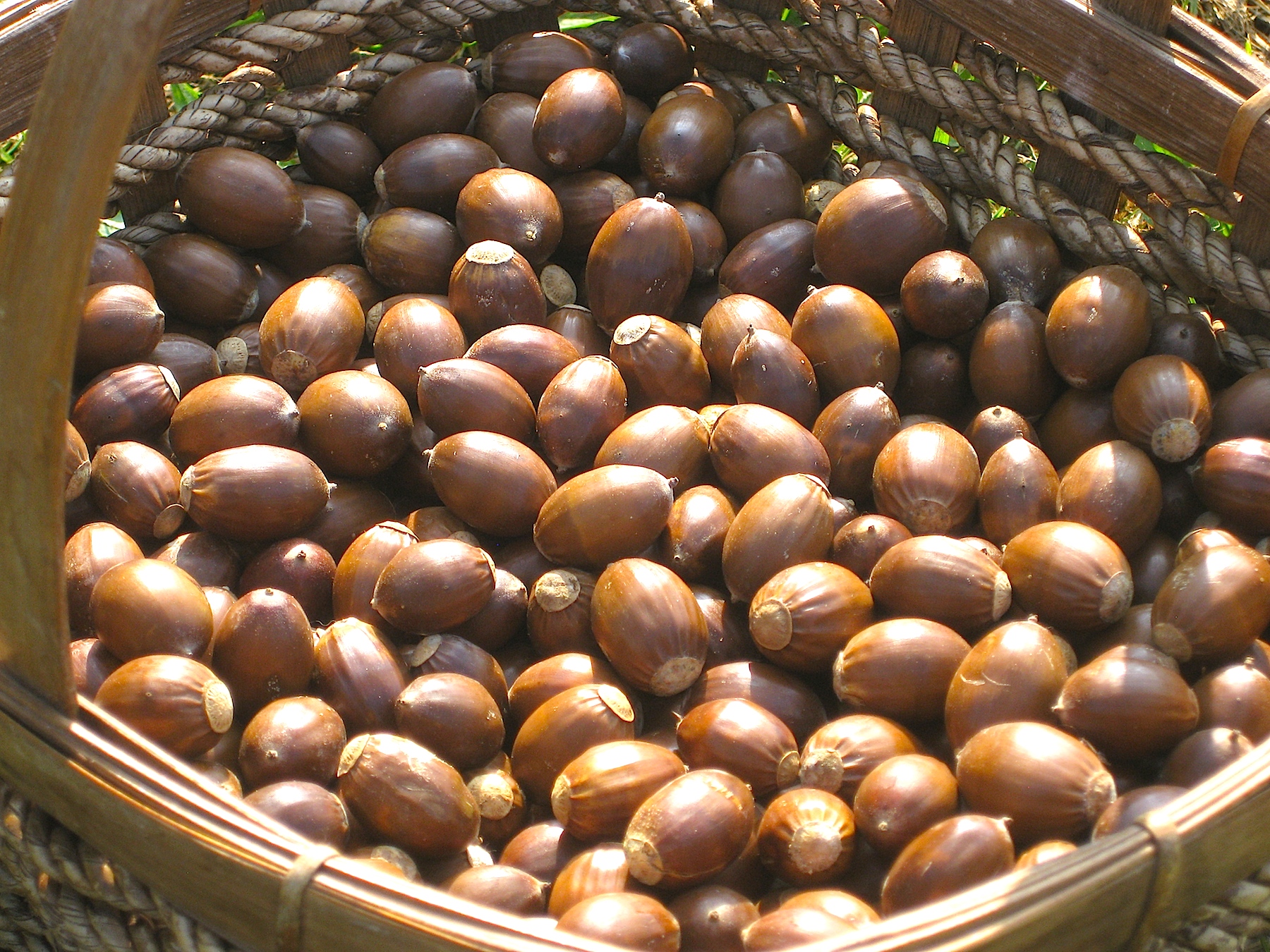
Harvesting Acorns From The Chestnut Oak, Quercus prinus

chestnutoakacornswildfoodism

Local? Check. Sustainable? Check. Paleo? More Paleo than almond flour cookies, that’s for sure.

Autumn is acorn season … not just for stepping on, for crafts, for throwing, or for the squirrels, deer, wild turkeys, jays, and weevils. They’re an excellent wild food source for Homo sapiens, and I encourage you to explore the almost-forgotten art of harvesting, processing, and consuming acorns.

You can eat a few acorns raw … they provide a very astringent mouth feel due to the presence of tannic acids. If consuming large quantities, however, processing is the way to go for taste and health (that’s right, processed food can be good for you). This involves some variation of drying, shelling, grinding, leaching, and cooking.

These are acorns gathered from the chestnut oak (Quercus prinus), a native tree common on dry, rocky slopes and ridges from central Mississippi to southern Maine. A member of the white oak group, the chestnut oak produces acorns that mature and germinate in a single season. These were gathered a few weeks ago before they had the chance to sprout (which they’re doing like crazy right now).

Acorns will constitute a good portion of my winter calories, and I hope you’ll find as much pleasure as I do in harvesting, processing, and consuming America’s original superfood!


Leave a comment

Honey mushroom (Armillaria mellea complex)

honeymushroomwildfoodism

Ah yes, I’m glad these woods carry honey mushrooms. And look, freshly stocked … no line either!

Well, maybe I shouldn’t consider it a “good” thing, as honey mushrooms are known to be some of the most aggressive mushrooms in nature, parasitizing trees and eventually causing their destruction. I’ll rephrase my opening statement to “It is what it is.”

Honey mushrooms are part of a species complex (Armillaria mellea complex), incorporating at least a dozen distinct species. They share characteristics, however, that can be used to tell them apart from other mushrooms in separate genera: Honey mushrooms have a veil (unless they’re ringless honey mushrooms … a separate species), they usually contain small dark hairs on the cap, they grow in clusters on wood – though the wood may be buried, and their spore print is white.

They’re a prized edible, somewhat resembling shiitake mushrooms (cooked, of course). They’re also quite medicinal. Research has shown that a water-soluble polysaccharide from the honey mushroom exhibits a potent tumor inhibitory effect on human lung cancer cells (Wu et al., 2012). The mycelia (the fungal “root-like” network) possesses an antibiotic compound, armillaric acid, that is effective against gram-positive bacteria and yeast (Obuchi et al., 1990). Honey mushrooms also contain the biologically active compounds tryptamine, L-tryptophan, and serotonin (Muszynska et al., 2011).

This is not generally considered a “beginner’s mushroom.” It may be confused with the deadly Galerina (Galerina marginata), which, as its name suggests, is one of the most poisonous mushrooms in the forest (and was growing not too far from this spot). The deadly Galerina is more fragile than a honey mushroom, has a smoother cap, and produces rusty-brown spores. For positive identification, field guides are great, though trusted mycological identifiers are the best.

Long live the autumn mushroom season!


Leave a comment

Autumn In Pennsylvania – Why Do You Look So Beautiful?

rickettsglenwildfoodism

The Walking Dead, Monday Night Football, and Talking Dead were the top three shows viewed last week, and I’m sure they deserve their rankings. It is my belief, however, that the “Greatest Show On Earth” title is more deservedly attributed to autumn’s annual spectacular display of color.

While we’re watching our old VHS copies of Hocus Pocus, trees are responding to the decreasing amount of sunlight by producing less and less chlorophyll. As the green pigments break down and chlorophyll production eventually ceases, carotenoids (yellow pigments) and anthocyanins (red and purple pigments) are unmasked. Certain fall colors are associated with specific trees. For example, autumn leaves of tulip poplar, beech, and the birches are usually a shade of yellow, while the autumn leaves of dogwood, sourwood, and sumac are usually a shade of red.

These photos were taken last week at Ricketts Glen State Park in Pennsylvania (about a four-hour drive east from Pittsburgh), on a walk through an old growth forest teeming with at least two dozen waterfalls (and plenty of mushrooms).

Every season is beautiful in its own way, but jeez … few sights are more pleasing to the eye (and spirit) than autumn woodlands. Appreciate it while it’s hot!

P.S. Not knocking Hocus Pocus in any way … I actually really like that movie.