Foraging Pittsburgh

Wild Food Walks, Workshops, & Guided Nature Hikes


1 Comment

Medicinal Mushrooms For Human Papillomavirus (HPV)

HPVmushroomwildfoodism

They don’t call them “medicinal mushrooms” for nothing…

In a very recent study using human participants, all 3 of these – reishi (Ganoderma lucidum), turkey tail (Trametes versicolor), and chicken mushroom (Laetiporus sulphureus) – aided in clearance of oral human papillomavirus (HPV).

After 2 months of treatment, the combination of reishi and turkey tail was much more effective (displaying 88% clearance of the virus), compared to chicken mushroom alone (5% clearance). While there are numerous strains of this sexually transmitted virus, these mushrooms (i.e. allies, companions, friends) were tested against the strains that cause cancers in 70% of all cases. And they were effective … not in petri dishes, but in humans (International Journal of Medicinal Mushrooms, 2014).

Turkey tail is one of the most ubiquitous fungi inhabiting our woodlands in Pennsylvania. It overwinters, meaning you can harvest it today. The chicken mushroom, while not nearly as effective as the others against HPV, is fairly common and can be harvested early summer through autumn. Experts contend over whether the true reishi mushroom (G. lucidum) grows in North America, and it seems that perhaps this fungus is part of a species complex. Several closely related fungi (i.e. G. tsugae) are common in the American forests, especially in western Pennsylvania.

Meaning … the medicine is all around us, not just for HPV, but for well-balanced optimal health. The question is, how bad do you want it?

For more information on the anti-cancer properties of medicinal mushrooms, please check out an article I wrote for my wild food nutrition blog (Wild Foodism), entitled 3 New Studies Demonstrate The Anti-Tumor Efffects Of 3 Medicinal Mushrooms.
Leave a comment

Late Fall Oyster Mushroom (Panellus serotinus) – An Edible Winter Fungus

panellusserotinus2

Scarcity is only a perception, one that I find is eradicated easily by stepping into the forest. Regardless of what the holiday marketers tell you, abundance is all around us … and this abundance requires no down payment. This is what the late fall oyster mushroom has taught me.

No matter the season, no matter the weather … local food is available. Watch the video and you’ll see what I mean.

It’s December and fairly cold here in Pittsburgh, and local food is just a fallen tree away.

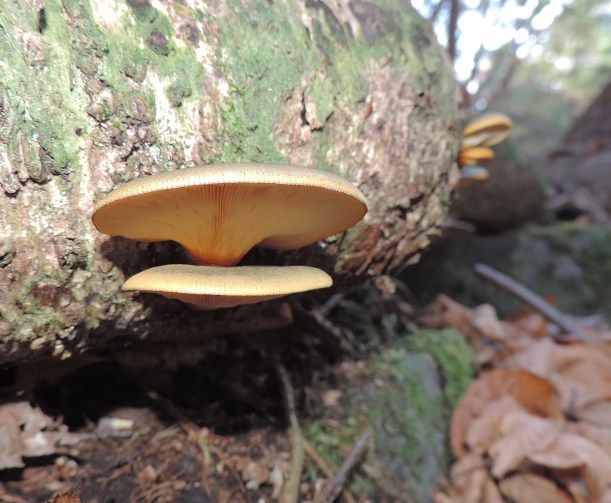
The late fall oyster mushroom (Panellus serotinus) is a cold-weather fungus traditionally eaten in Japan, where it is known as Mukitake. It has a wide distribution in the United States, and is very common in Pennsylvania. It’s a tough mushroom, one that requires slow, long cooking for best texture and flavor. Still, to get wild nutrition and medicine into your body, the late fall oyster mushroom can easily satisfy that need.

Speaking of medicine, research has shown that Panellus serotinus possesses anti-tumor and immuno-modulating activities, like many medicinal mushrooms (Kim et al., 2012). This is primarily due to its concentration of beta-glucans, which can easily be extracted through prolonged hot water decoctions (teas, soups). The late fall oyster mushroom, as shown in animal studies, also displays protection against non-alcoholic fatty liver disease and dyslipidemia (Inoue et al., 2013).

Not bad for a log-decomposer who doesn’t ask for much.

Look for this mushroom on dead hardwood logs and branches, and though its season is slowly dwindling, fruiting bodies are still plentiful this time of year. Colors vary – I’ve seen blends of grey, orange, yellow, and green. Look-alikes include the mock oyster (Phyllotopsis nidulans), though its cap is mostly orange, and its smell is rather unpleasant. Panellus serotinus also resembles the classic oyster mushroom (Pleurotus ostreatus), though the latter rarely contains shades of yellow/orange, can be much bigger, and is a choice edible anyway.

Keep an eye out for late fall oyster mushrooms on your next trek through the woods. And tell them Adam sent ya…


Leave a comment

Clavaric Acid, An Anti-Cancer Compound Found In Pennsylvania’s Mushrooms

clavaricacidwildfoodism

Let mushrooms be your medicine …

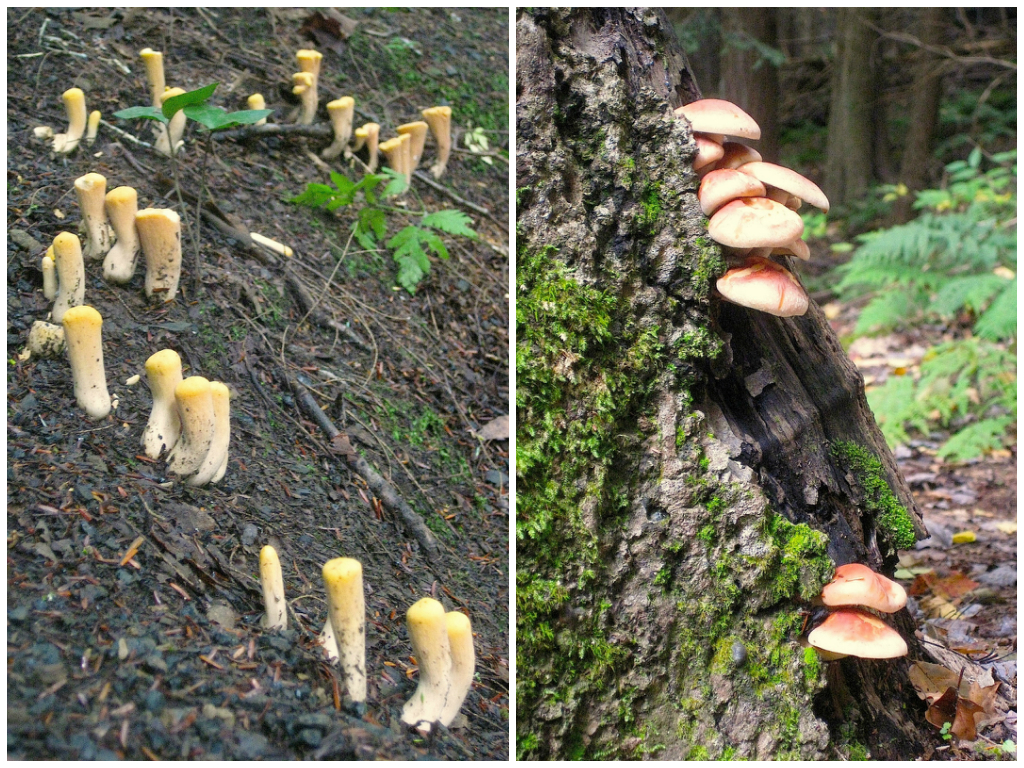
Club coral (Clavariadelphus truncatus, left) and brick caps (Hypholoma sublateritium, right) are two mushrooms that inhabit western Pennsylvania. And both mushrooms share a unique and remarkable trait: possession of the anti-cancer, anti-tumor compound – clavaric acid (not an illegal act in the forests apparently).

Within our bodies, there are genes (“ras” genes) which code for numerous proteins that function in cell growth and differentiation. This is normal. Mutations in these genes, however, can code for proteins that essentially become “stuck” in the growth signal transmission state – leading to uncontrollable growth … which could eventually result in cancerous conditions.

Ras proteins require enzymes known as FPTases for both normal and cancerous activities. An inhibitor of these enzymes, research suggests, may be an effective way to impede cancerous proliferation. And what do ya know … the compound isolated from these mushrooms – clavaric acid – has been shown to be an effective FPTase inhibitor. Research also suggests that these inhibitors may be effective cancer-prevention tools, particularly against colorectal, pancreatic, and lung cancers (Kelloff et al., 1997).

I don’t know too many people who own laboratories, so it may be difficult for us to isolate clavaric acid ourselves. These mushrooms are edible though, and perhaps we are consuming minuscule levels of this compound with every bite. And perhaps these minuscule levels aren’t for naught … maybe they really do add up. And maybe they’re absolutely necessary – all these myco and phytochemicals – for us to thrive today in a world teeming with at least 84,000 synthetically-derived chemicals (released into the environment since 1975, according to the TSCA Chemical Substance Inventory).

Club coral (left) can be found among coniferous woods in late summer and fall (a bit too late for them now … this picture was taken in late August). Brick caps (right) can be harvested throughout autumn, sometimes into the early winter months. Everything we need (yes, everything) is all around us … not necessarily at the mall, not necessarily in the supermarket … but surely in nature.


Leave a comment

Brick cap mushrooms, Hypholoma sublateritium, in Pennsylvania

brickcapswildfoodism

Don’t hang your basket up for the year just yet … many mushrooms can still be found in the Northeastern United States (in fact, even in January you can find me mushroom hunting).

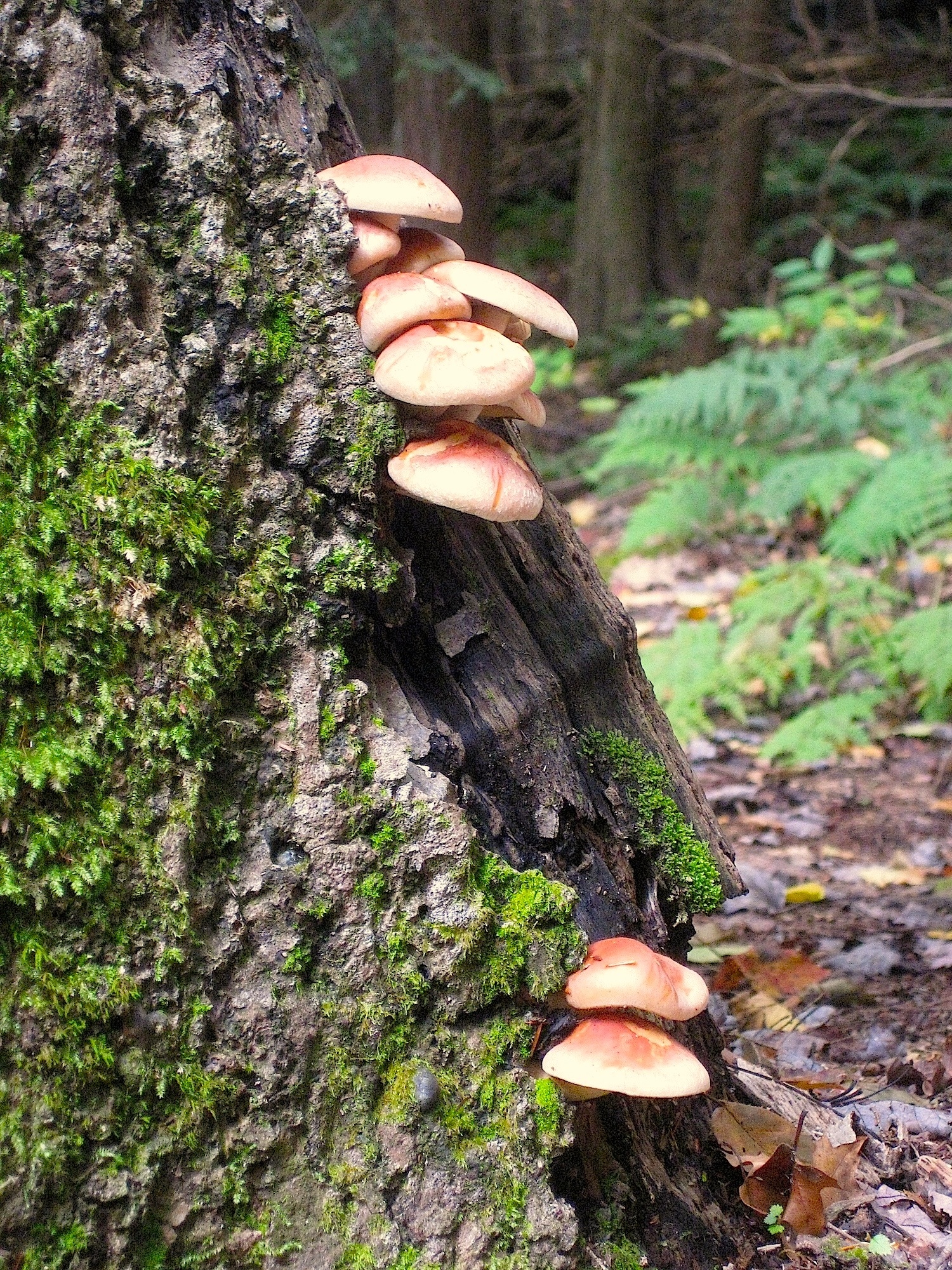
These are brick caps (Hypholoma sublateritium) – edible mushrooms that improve in taste as the year progresses. They can usually be found in the autumn months through winter, though they become less bitter generally after the first frost.

This is not a beginner’s mushroom. Brick caps resemble sulfur tufts (Hypholoma fasciculare), poisonous mushrooms that grow within the same season (I found sulfur tufts not too far from this spot).

Both grow in clusters on decaying wood and produce purple-brown spore prints, though brick caps have reddish caps (paler at the margins) with grayish-purplish brown gills, and sulfur tufts usually have greenish yellow caps with greenish yellow gills (becoming darker with age).

This picture was taken in October, though I am still finding brick caps on stumps here in western Pennsylvania.  Sure, they may be frozen.  Harvest them (if you’re absolutely positive they are indeed brick caps), take them home, and they will thaw in no time.

There are many things for which I am grateful in life … cold-loving fungi definitely make the list.


1 Comment

Turkey Tail Mushroom And Its Medicinal Benefits

turkeytaillogwildfoodism

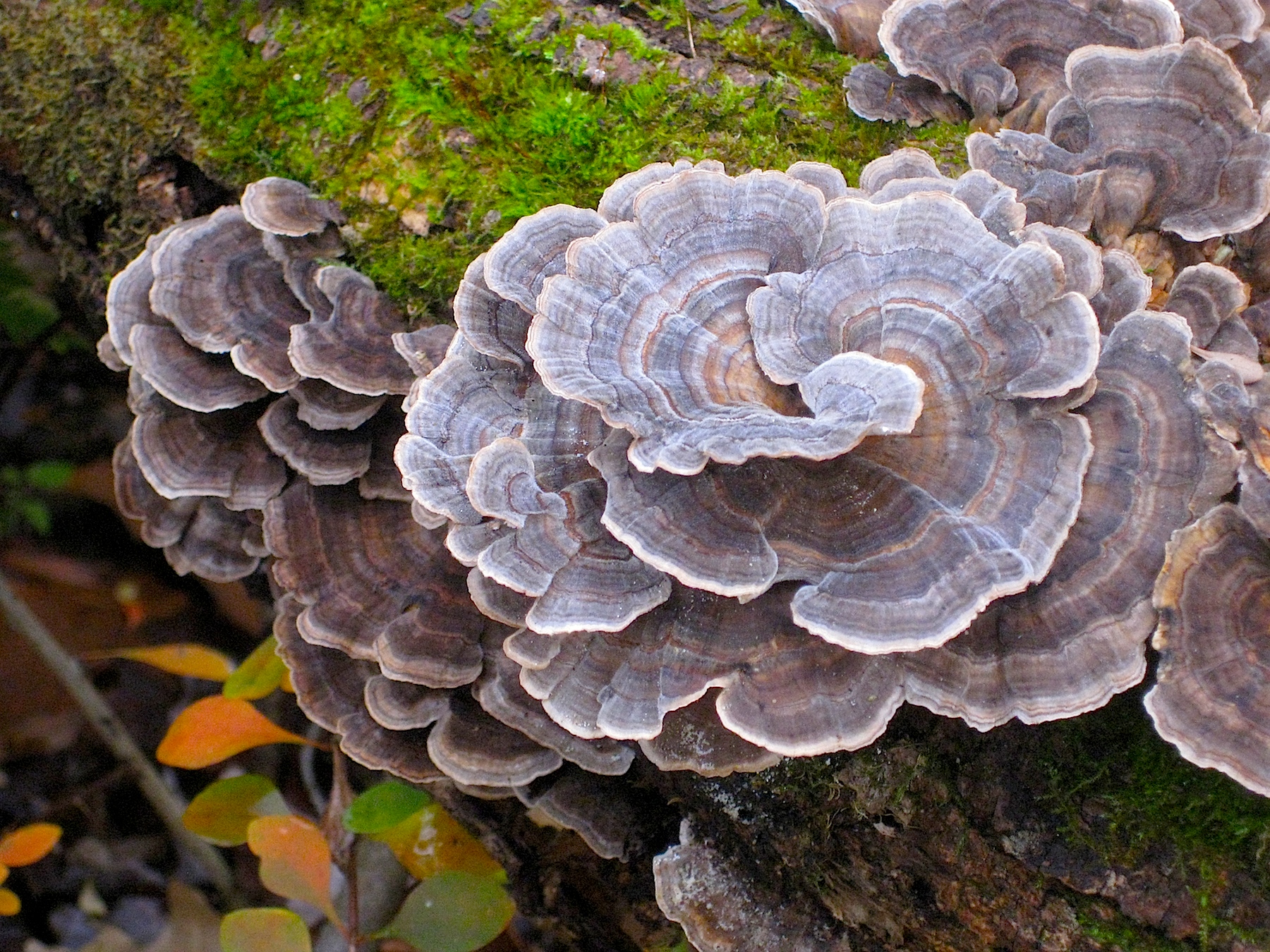
One particular fungus really begins to shine this time of year when hardly a mushroom wishes to poke its fruiting body from the earth. I am referring to the aptly named Turkey Tail fungus (Trametes versicolor).

Turkey Tail is not difficult to locate, as it’s one of the most ubiquitous fungi found in our woodlands. Look around at the logs, stumps, and fallen branches in your neck of the woods – and you may eventually discover Turkey Tail. It’s not necessarily edible (too tough), though it sure is medicinal.

One particular study found that Turkey Tail can improve immune system status in immuno-compromised breast cancer patients following conventional cancer treatment (Torkelson et al., 2012). These findings are extremely important, as the study was not conducted on animals, nor in petri dishes, but rather on living human subjects.

A more recent human trial (again – not in animals, nor in petri dishes) found that a polysaccharide extracted from Turkey Tail mycelia displayed prebiotic effects in the human microbiome (stimulating the growth and maintenance of beneficial intestinal bacteria). In the same study, participants who were instead fed Amoxicillin (an antibiotic) demonstrated detrimental shifts towards more pathogenic bacteria in their microbiome, with effects lasting up to 42 days after their final antibiotic dose (Pallav et al., 2014).

Antibiotics are among the most commonly prescribed drugs used in conventional medicine. According to the CDC, up to 50% of all antibiotics prescribed are not needed or not optimally effective. The threat of antibiotic overuse is massive, of which the worldwide problem of antibiotic resistance is but one manifestation. Additionally, Clostridium difficile infections are on the rise due to overuse of antibiotics, leading to numerous preventable deaths.

A wise first-line strategy would be to optimize our intestinal flora as best we can, and it seems that Turkey Tail may be able to help. Its medicine is easy to acquire. Hot water decoctions can be created and sipped as a tea, or simmered in broth and consumed as a soup. Additionally, dual extractions can be created, first in alcohol, then in hot water, and finally combined.

Turkey Tail is a great mushroom to hunt in the late autumn and winter months. While there are look-alikes, most are benign. Happy fall foraging!

(Photo taken November 1st in western Pennsylvania)


Leave a comment

Maitake Mushroom For Inflammatory Bowel Disease

maitakeIBDwildfoodism

Colono-protective … is that even a word? The maitake mushroom don’t care, because it knows what it is … colono-protective, or demonstrating protection against inflammation and ulceration of the colon.

Research from Experimental & Molecular Medicine (2009) found that a maitake mushroom water extract ameliorated colon inflammation in animals by suppressing production of TNF-alpha, an inflammatory response promoter involved in IBD (inflammatory bowel disease). According to the researchers, “The results strongly suggest [maitake water extract] is a valuable medicinal food for IBD treatment, and thus may be used as an alternative medicine for IBD.”

I’d like to see the “alternative” status promoted to “primary,” and perhaps if future research demonstrates similar results, we’ll see this shift happen.

For now though, it’s quite easy to produce similar medicine at home. Decoct a few tablespoons of maitake in hot water, strain, and enjoy as a hot tea. Additionally, maitake can be incorporated in soup stocks, allowing its medicine and rich flavor to become extracted over several hours of simmering.

By the way, if you’re interested in harvesting maitake mushrooms (Grifola frondosa for the Linnean crowd), they’re one of the “safer” fungi inhabiting our forests in western Pennsylvania (though their season is just about over this time of year). For more information, check out http://wildfoodism.com/2014/10/07/5-easy-to-identify-edible-mushrooms-for-the-beginning-mushroom-hunter/


Leave a comment

Honey mushroom (Armillaria mellea complex)

honeymushroomwildfoodism

Ah yes, I’m glad these woods carry honey mushrooms. And look, freshly stocked … no line either!

Well, maybe I shouldn’t consider it a “good” thing, as honey mushrooms are known to be some of the most aggressive mushrooms in nature, parasitizing trees and eventually causing their destruction. I’ll rephrase my opening statement to “It is what it is.”

Honey mushrooms are part of a species complex (Armillaria mellea complex), incorporating at least a dozen distinct species. They share characteristics, however, that can be used to tell them apart from other mushrooms in separate genera: Honey mushrooms have a veil (unless they’re ringless honey mushrooms … a separate species), they usually contain small dark hairs on the cap, they grow in clusters on wood – though the wood may be buried, and their spore print is white.

They’re a prized edible, somewhat resembling shiitake mushrooms (cooked, of course). They’re also quite medicinal. Research has shown that a water-soluble polysaccharide from the honey mushroom exhibits a potent tumor inhibitory effect on human lung cancer cells (Wu et al., 2012). The mycelia (the fungal “root-like” network) possesses an antibiotic compound, armillaric acid, that is effective against gram-positive bacteria and yeast (Obuchi et al., 1990). Honey mushrooms also contain the biologically active compounds tryptamine, L-tryptophan, and serotonin (Muszynska et al., 2011).

This is not generally considered a “beginner’s mushroom.” It may be confused with the deadly Galerina (Galerina marginata), which, as its name suggests, is one of the most poisonous mushrooms in the forest (and was growing not too far from this spot). The deadly Galerina is more fragile than a honey mushroom, has a smoother cap, and produces rusty-brown spores. For positive identification, field guides are great, though trusted mycological identifiers are the best.

Long live the autumn mushroom season!


3 Comments

Another Bear’s Head Tooth (Hericium americanum) near Pittsburgh

adamcollage

I don’t usually characterize the foraging year as being “a good year for bear’s head tooth.” Chicken mushroom – let’s talk about them; chanterelles – they definitely deserve a mention; morels – let me see your pictures. Based on the last few weeks exploring the forest, however, I can confidently proclaim that it has been a great year for bear’s head tooth!

Bear’s head tooth (Hericium americanum) provides a stunning sight with its branched icicle-like body, resembling a miniature frozen waterfall. It appears late summer through autumn on fallen logs or the wounds of trees (mostly hardwoods), though its presence is considered infrequent to rare. All the more reason for me to proclaim that it has been a great year for this forested jewel, as I have found it on numerous occasions.

Other Hericiums (of which lion’s mane is one) resemble bear’s head tooth, and all are considered to be edible (cooked, of course) with no poisonous look-alikes. Cut it into small pieces, saute it in butter with garlic, season with your favorite spices, and serve with a squeeze of lemon.

I found this magnificent specimen while hiking in a park northwest of Pittsburgh.

Happy fall foraging!


Leave a comment

5 Easy-To-Identify Edible Mushrooms For The Beginning Mushroom Hunter

chickenofthewoodswildfoodism2

In the world of foraging, few organisms conjure up more fear and mystery than mushrooms.  Tell someone you harvest wild berries, and he thinks to himself what a great hobby.  Tell another person you hunt wild mushrooms, and she fears for your life.

“Aren’t you scared?”

“What if it’s poisonous?”

“I could never pick wild mushrooms, they’re much too dangerous.”

The fungal kingdom, it seems, is a bit of an enigma.  In 1991, a paper was published suggesting that, although 1.5 million fungi were thought to have inhabited the earth, only about 70,000, or 4.7%, of fungal organisms were identified at that time (1).  Today, it is estimated that there are 5.1 million fungal species in existence, and the number of identified species is still quite small in comparison.

It’s true, out of 5.1 million fungal species, some of them are quite toxic …

Read the rest of this post here.


Leave a comment

Pear-shaped puffball, Lycoperdon pyriforme

puffballwildfoodism

You’d think with all that room in the forest, they’d give each other space. I don’t mind though … makes it that much easier to collect.

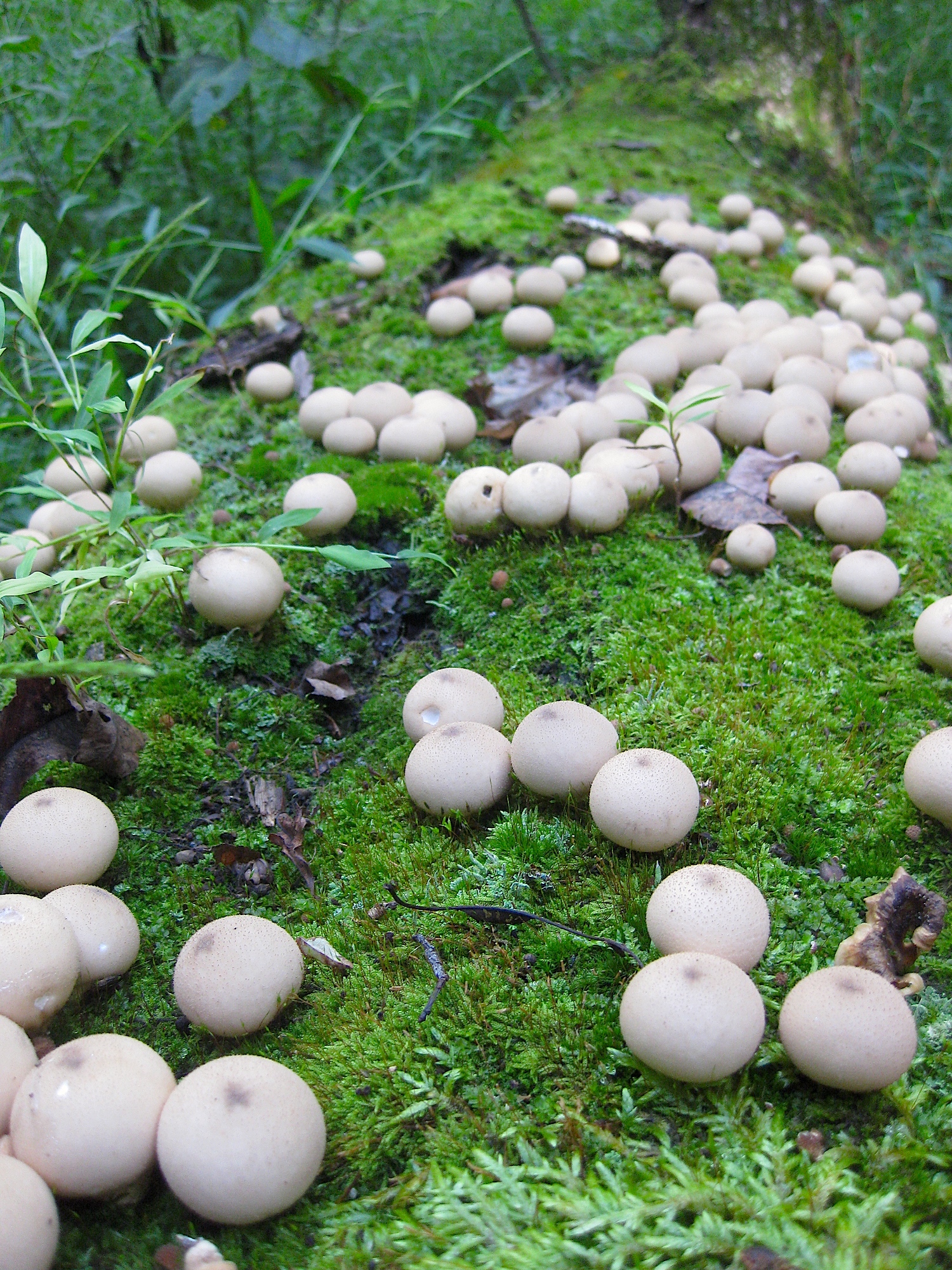
This is the pear-shaped puffball (Lycoperdon pyriforme), an edible mushroom that has the texture of a marshmallow. Cut each one in half to see how it looks – the closer to pure white, the better it tastes (cooked, of course).

Another reason to cut each one open is to confirm that it is indeed a pear-shaped puffball. If it’s black inside, it could be a toxic Scleroderma mushroom. If it’s not pure white all the way through, and you see an outline of a developing mushroom, you probably have a poisonous Amanita. So, just to be safe … cut each one in half!

Look for the pear-shaped puffball scattered on logs and stumps throughout the fall (and the spent versions throughout the winter). And tell them Adam sent ya.

This particular cluster was found about 15 miles outside of Pittsburgh, Pennsylvania in late September.