Foraging Pittsburgh

Wild Food Walks, Workshops, & Guided Nature Hikes


Leave a comment

How To Prepare And Eat Skunk Cabbage

skunkcabbagenorthpark

Have you ever eaten eastern skunk cabbage (Symplocarpus foetidus)?

I’ve always wanted to try it, and recently I finally did.

Pictured above are the flowering structures of eastern skunk cabbage, which appear before the leaves develop.

Experts recommend only harvesting skunk cabbage for the table when the unfurled leaves (not the flowering structures) are no more than 8″ high.  Once the leaves open, they’re past their prime.

Here is a picture of the leaves, which appear after the flowers develop.

Skunkcabbageleaves2019

I boiled the leaves in 4 changes of water (bringing water with leaves to a boil for at least 5 minutes, discarding water, adding new water, repeating a few more times).  Why is this necessary?  Skunk cabbage contains a very high concentration of calcium oxalates which will burn and inflame the mouth.  Rapid boiling can be used to dissolve the calcium oxalate crystals.

After 4 changes of water, the skunk cabbage showed no signs of having any detectable calcium oxalate crystals.  The greens shrunk a whole lot, and if I were to do it again, I’d use more greens.  They were mild (what else could I have expected after 4 changes of water?), though they had a soft texture… almost like wilted spinach.

As I write this, the last week of April is upon us.  The prime stage for harvesting skunk cabbage, unfortunately, may have already come and gone.  Keep this information handy for next year though, and you’ll have some new greens to sample (though certainly not to overindulge in) between the weeks of March and April.


Leave a comment

Spring Foraging Hike Scheduled For April 25th

rampswildfoodism

Greetings!

I am happy to announce that I will be leading a Spring Foraging hike on Saturday, April 25th at North Park in Allegheny County.

If you are interested in learning how to gather nutritious, free food directly from your landscape (no middle man or woman required!), then this is the perfect class for you!

Why do I think this is the perfect class?  Well, spring is such a great season to learn the craft of foraging.  There is an abundance of wild food available this time of year, including:

  • Spring beauties
  • Wild leeks, or ramps
  • Morel mushrooms
  • Trout lilies
  • Stinging nettles
  • Chickweed
  • Eastern redbud flowers

…and a whole lot more.

By attending this spring foraging hike on April 25th, you will learn:

  • Wild plant field identification
  • Wild plant nutrition (Wild plants are, on average, more nutritious than their cultivated counterparts.  More nutrition = a healthier you.)
  • Harvesting methods
  • Culinary applications
  • Medicine making
  • Drying and storing methods

…and much more.

Details:

When:  Saturday April 25
Where:  North Park, Allegheny County Pennsylvania
Time:  1-3 PM
Investment:  $15 (kids 10 and under free)

Space for this hike is limited in order to maximize the learning environment, and registration with payment in advance is required. The exact meeting location will be provided upon registration. To register, please contact me (Adam) at

adamharitan@gmail.com

Thank you! I’m looking forward to seeing you there!
-Adam


Leave a comment

Finding Morel Mushrooms In Pennsylvania

morelmushroomwildfoodism

I am going to make this as easy as I can for you.  The fungal kingdom is complex… mushroom hunting doesn’t have to be.

You’ve landed on this page for a reason.  You want to find some mushrooms.  No, not those white button mushrooms at the store.  Heck, you probably don’t even care about chicken mushrooms or hen of the woods this time of year.

You want morels, and I can help…

Read the rest of this article at Wild Foodism


Leave a comment

Nature’s Imprints

nuthatchwildfoodism

Foraging isn’t always about the food. The connection to nature penetrates much deeper.

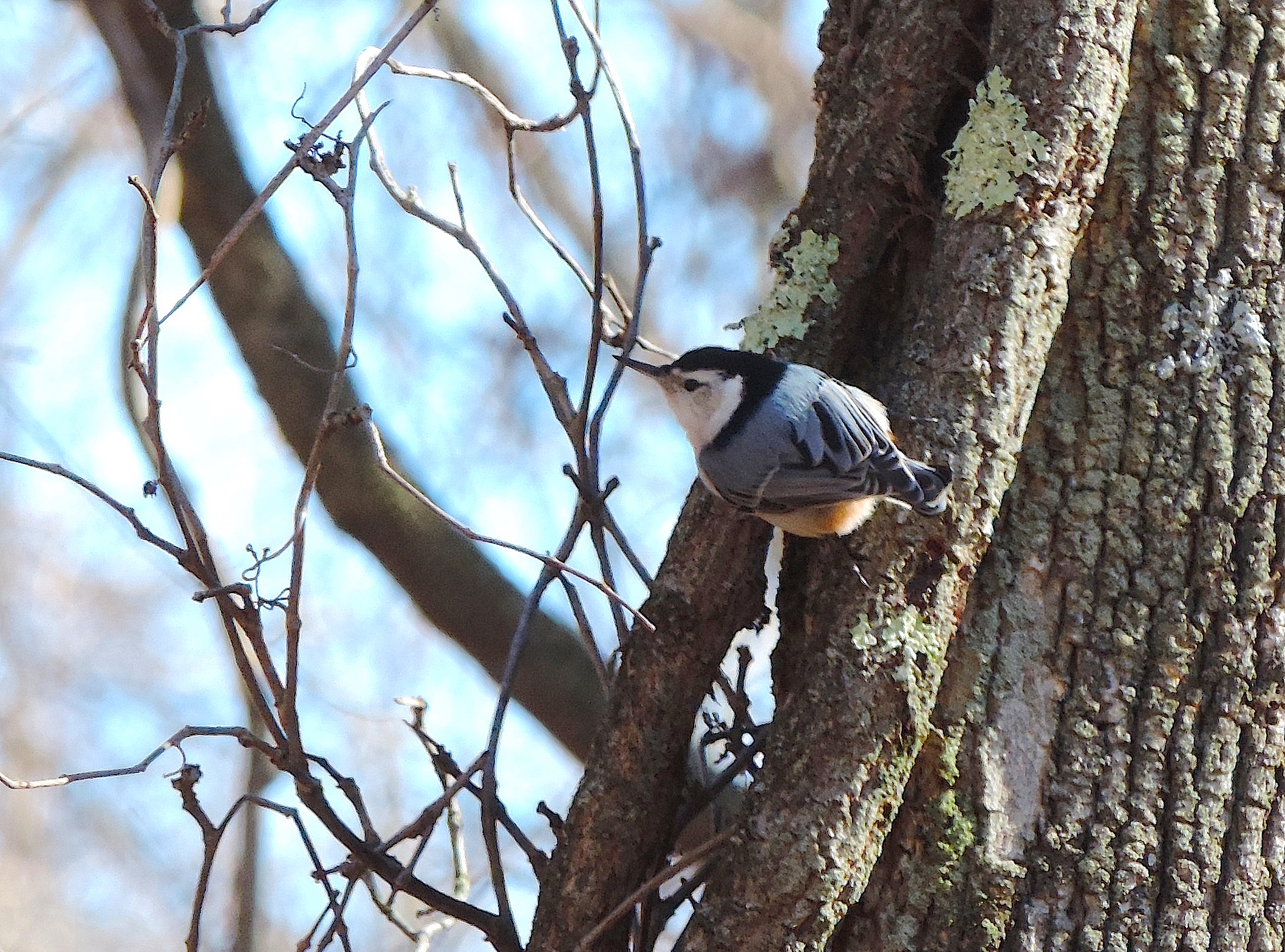
Foraging allows us to connect to all the species within our landscape, and while we may think that we’re leaving with a basket full of nettles, we’re also leaving with an infinite amount of nature’s imprints… for example, the sight and song of this white-breasted nuthatch, who kept my eyes off the woodland floor for just a few moments while it danced up and down the tree. Seems like I wasn’t the only one foraging and having a good time that day!

Impressions like these are irreplaceable, and although we can leave a grocery store with enough food to last a lifetime, our shopping carts will always be devoid of things much greater, things that cannot be quantified with RDAs or DRIs…

Nature’s imprints.


Leave a comment

Spring Greens in Western Pennsylvania – Stinging Nettles

nettlesnorthparkwildfoodism

The rewards of a long winter are quite visible now…

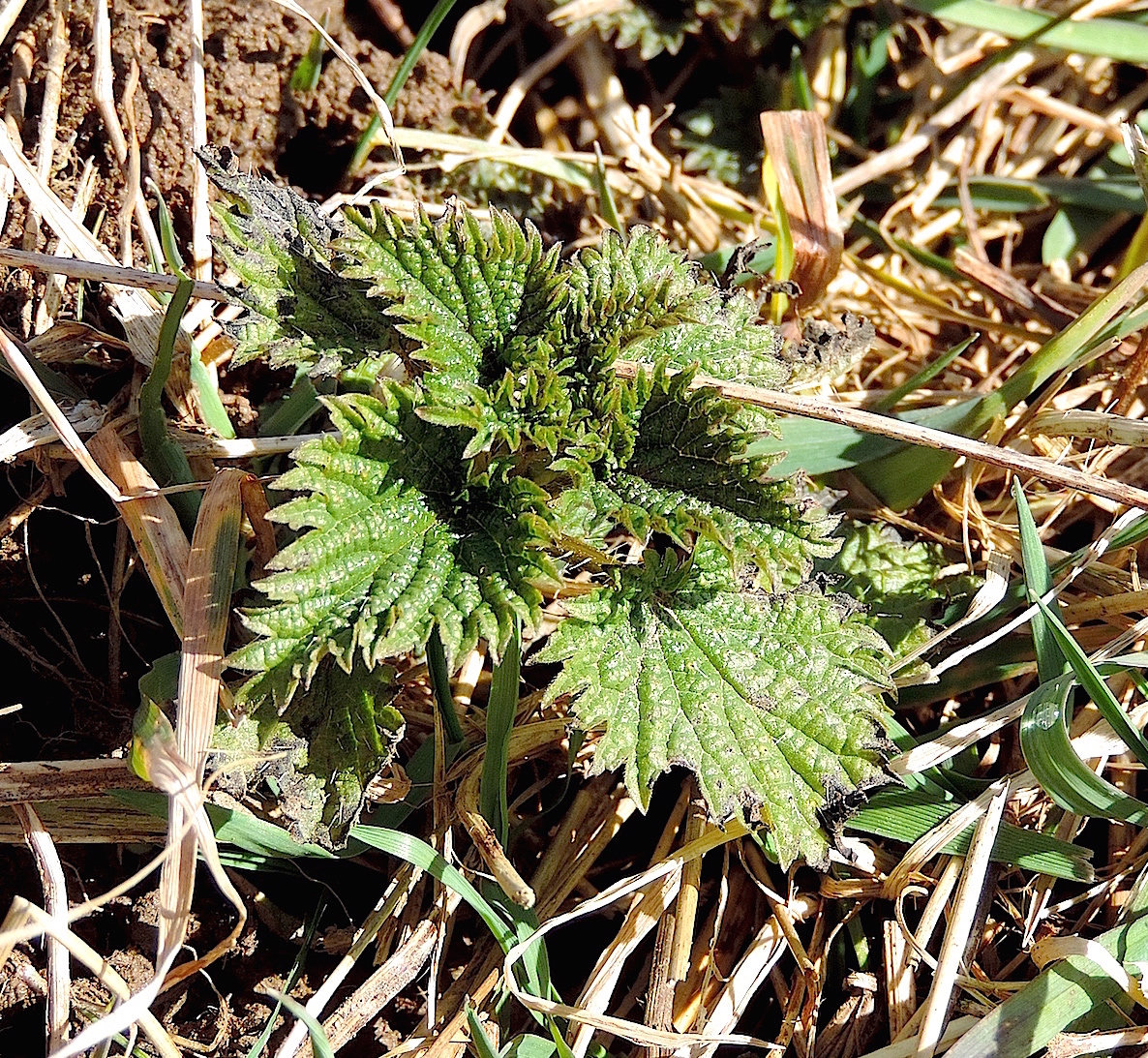
Stinging nettles are beginning to pop up all over. They’re much easier to harvest with bare hands when they’re young, though who doesn’t enjoy the occasional injection of acetylcholine and histamine from the matured specimens directly into your fingers? (…legs sometimes, too. And I have to admit, I have sat on them more than once…)

Nettles are some of the tastiest wild greens, they’re nutritious, and they’re quite medicinal, too. Research shows that various parts of the plant may treat benign prostatic hyperplasia (BPH), type 2 diabetes, and allergic rhinitis (allergies).  To learn more about the health benefits of stinging nettles, check out this recent article I created over at Wild Foodism.

Enjoy the seasonal transition while it lasts… it’ll be summer before we know it. Until then, happy spring foraging!

Photo taken at North Park in Allegheny County, Western Pennsylvania.


Leave a comment

Maple Sugaring At Raccoon Creek State Park With Patrick Adams

maplespileswildfoodism23

Foraging… how did you learn the craft?

Books, videos, friends, walks, workshops?

For me, it all began with a single wild edible walk in my neighborhood.  Two local experts led 12 of us through a park, pointing out all the wild species that could be used for food and medicine.

Wow!  I was hooked.

Shortly after, I immersed myself in all the foraging literature I could acquire.  I purchased the books, I read the online blogs, and I joined the foraging message boards.

All of these methods were instrumental in advancing my foraging skills.

Still, I have found few better ways to truly learn this craft… to really understand it inside and out… than by studying with the experts.  In person.  Face to face.  (Well maybe not that close, but you get the point.)

I feel there is no substitution for the classic mentor/student relationship, and because of this, I seek out mentors every chance I get.

Take Patrick Adams, for example.  Patrick is an environmental educator at Raccoon Creek State Park, a 7,572-acre state park located in Southwestern Pennsylvania.

I’ve learned many skills from Patrick:  primitive fire craft, acorn processing, and maple sugaring, just to name a few.

Recently, I had the pleasure of interviewing Patrick one day prior to the annual maple sugaring workshop he runs at the park, and today I am happy to be sharing this interview with you.

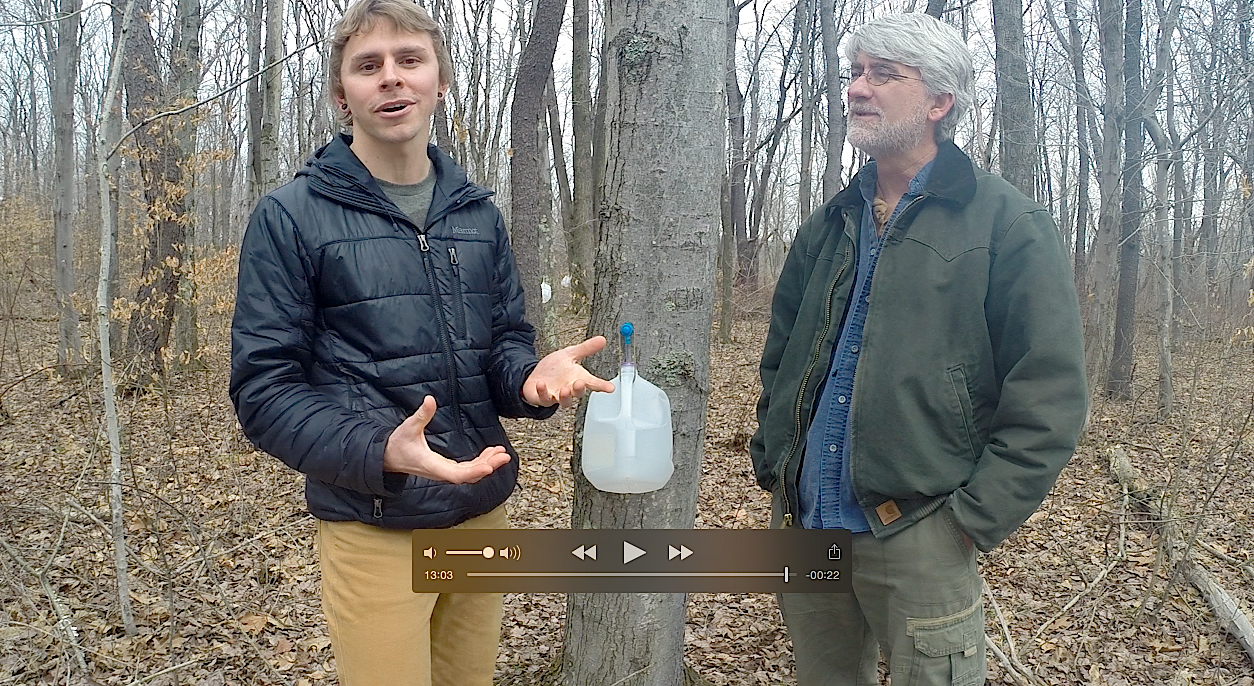
In this video, we talk all things maple sugaring, including Patrick’s early experiences with this craft, red vs. sugar maples, indigenous practices, and more.

If you haven’t tapped any trees yet, I bet you’ll be inspired to do so!

Check out the video… I’d love to know what you think!

Back to the original question:  How did you learn the craft of foraging?  Books, videos, mentors like Patrick?  Feel free to comment below and let me know… I’d love to hear from you!

Thanks for reading and watching!


Leave a comment

Marcescence – What It Looks Like and Which Trees Display It

americanbeechwildfoodism

Is there something wrong with this tree? Poor guy, shouldn’t it have dropped its leaves by now?

When walking through the winter woods, you may notice certain trees retaining their dead leaves. The term used to describe what you’re seeing is marcescence, a condition which may fulfill a variety of purposes (nutrient recycling, deterring animals from browsing buds, etc.).

The American beech tree (Fagus grandifolia), pictured here, classically displays marcescence. Other trees that retain their leaves include oaks (Quercus spp.), hornbeam (Carpinus caroliniana), and hophornbeam (Ostrya virginiana). You’ll occasionally see this with witch hazel (Hamamelis virginiana) and sugar maples (Acer saccharum) too.

Even though spring is finally here, most trees have yet to bud.  A good piece of winter/early-spring tree ID advice is this: if you see a deciduous tree in winter and early-spring holding on to most of its leaves, you may be able to narrow it down to the trees listed above… not always, but it’s a great starting point!

This photograph was taken on March 2nd (my birthday!) at Moraine State Park in Western Pennsylvania.


Leave a comment

Western Pennsylvania Maple Sugaring

adampatadamswildfoodism

I had the pleasure of interviewing my friend Patrick Adams — naturalist and environmental educator at Raccoon Creek State Park in Western Pennsylvania.

We talked all things maple sugaring, including his early experiences with this craft, red vs. sugar maples, indigenous practices, and more!

If you haven’t tapped any trees yet, I bet Patrick will inspire you to do so!

Look for the video next week!


Leave a comment

Check Your Backyard First Before Buying Another Superfood

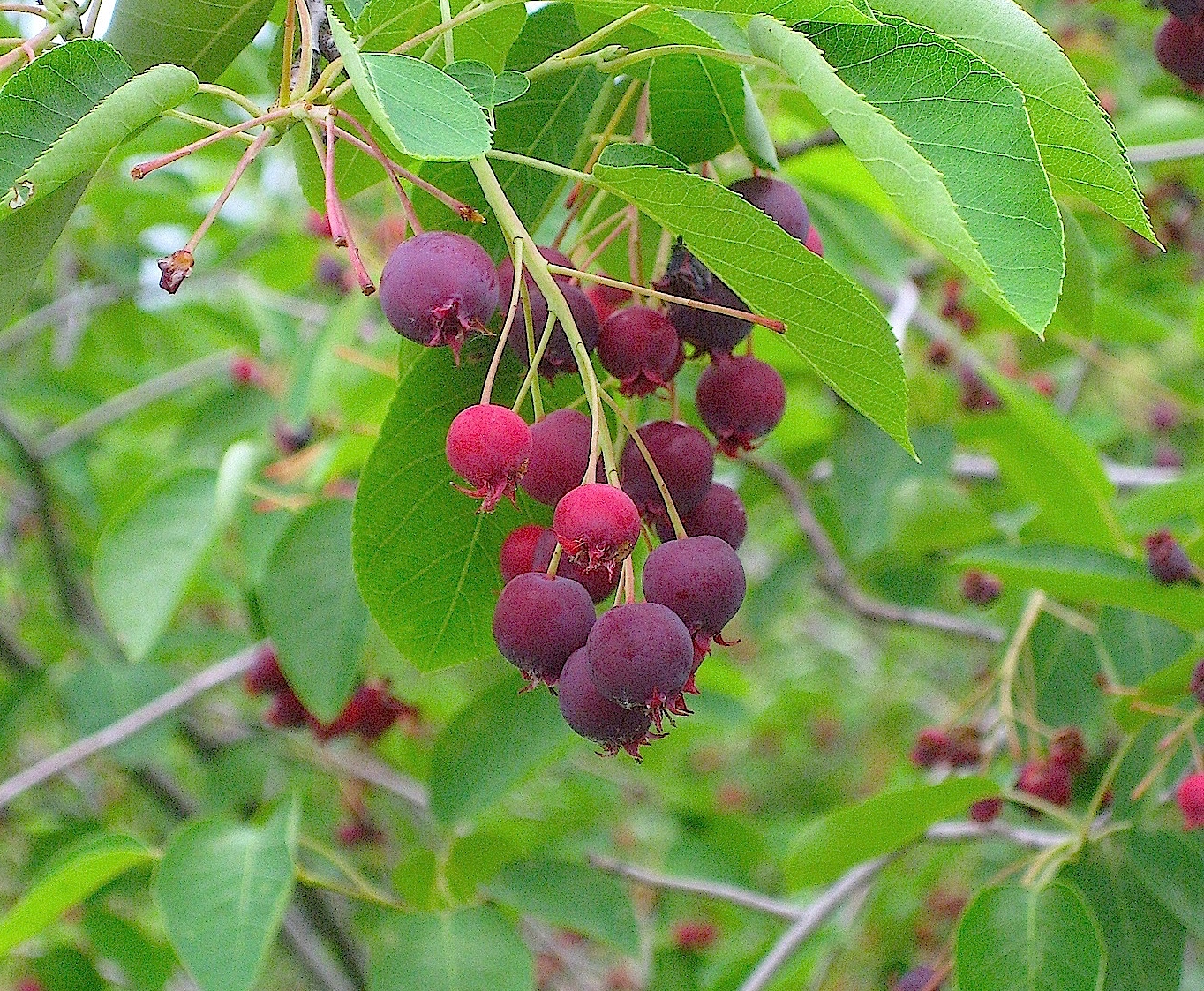
juneberryripe2wildfoodism

I know what you’re thinking.  “Oh no, not another article on superfoods…”

Or maybe you weren’t thinking that at all, but now you are because I brought it up.

Or maybe I’m just looking into things a little too much.  Anyway…

I’m not here to proclaim that I have discovered a new miracle food – an ancient plant that sheds unwanted pounds, curbs your appetite, supercharges your immune system, and contains so many antioxidants that the concept of infinity seems miniscule in comparison.

Foods like that probably exist, but I’ll let someone else sell you on them.

Rather, my intention in writing this article is a bit different.

If you’ve felt confused over all the superfood hype – not sure which Amazonian berry should go into your morning smoothie; considering if it’s really worth spending $29.99 on 3 ounces of powdered fruit that contains more vitamin C than 12,000 oranges – I’m here to say, “It’s okay.”

Really, it is.  Your health can flourish with or without these products.

Phew, take a breath.  I just saved you some serious cash!

However,  I’m not going to let you off the hook that easily.  If I did, my writing would be done for the day, but I would also be doing everyone a big disfavor…

Read the rest of this article at Wild Foodism


Leave a comment

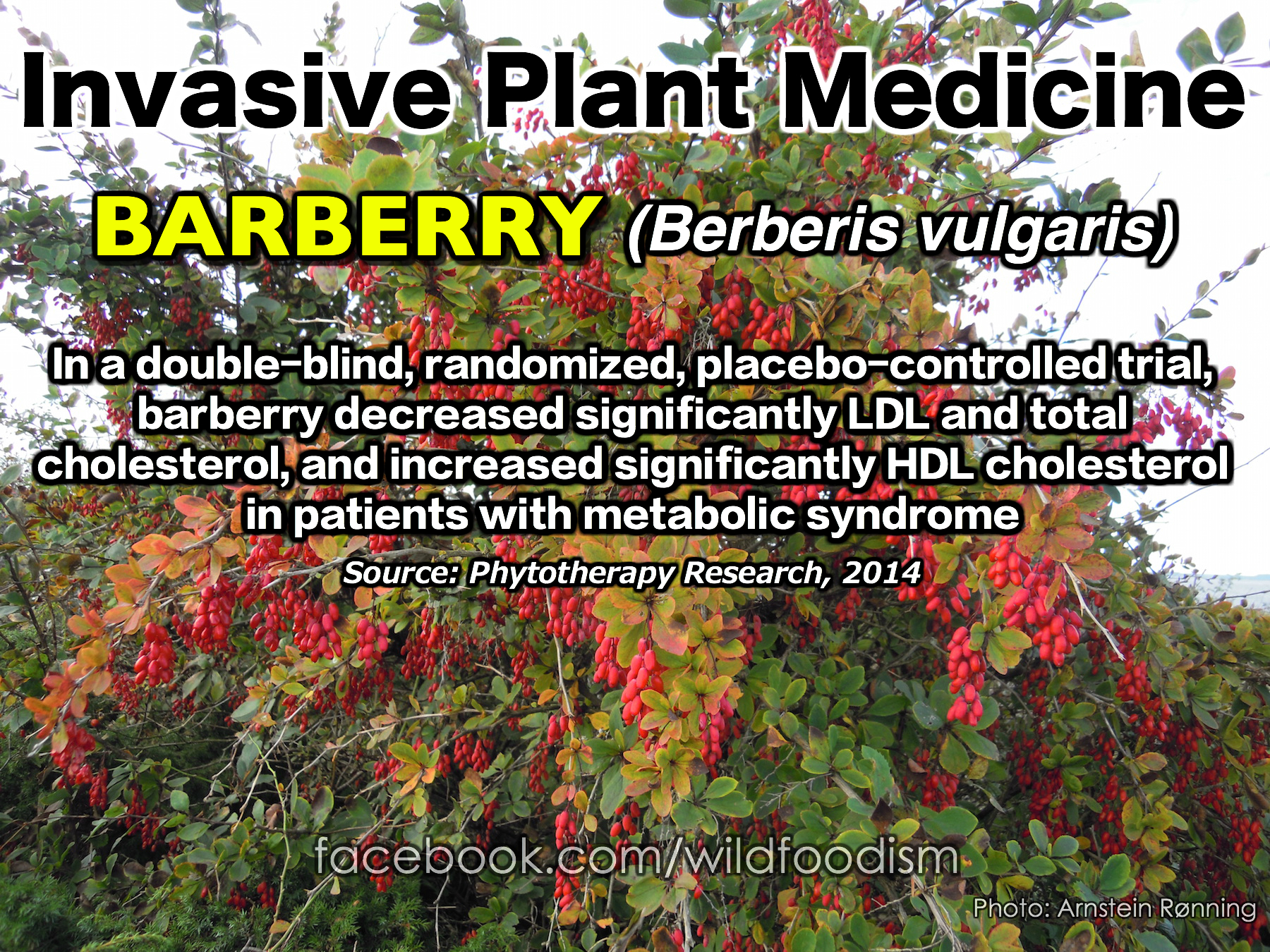
Barberry (Berberis vulgaris) Lowers LDL, And Raises HDL Cholesterol

Berberisvulgariswildfoodism

Native to Europe and western Asia, common barberry (Berberis vulgaris) is considered invasive in many American states.  This shrub can be found in cultivation, though it tends to find its way into fields, pastures, and disturbed woods here in Western Pennsylvania.

The compound likely responsible for its cardio-supportive effects is berberine, an alkaloid that demonstrates a wide range of pharmacological activities (anti-microbial, anti-inflammatory, anti-cancer).

While berberine is distributed throughout the barberry plant (and throughout the genus), this particular study utilized 200 mg of the fruits in dried form.  If you’re interested in using barberry fruits for medicine, I commend you.  I mean, it’s not everyday that you hear someone say “I’m looking to improve my cardiovascular risk markers by using the wild medicines of my landscape.”

The question, therefore, is not “will it…?” but instead “will you…?”

Anyway… look for the fruits to be ripe late summer through autumn.