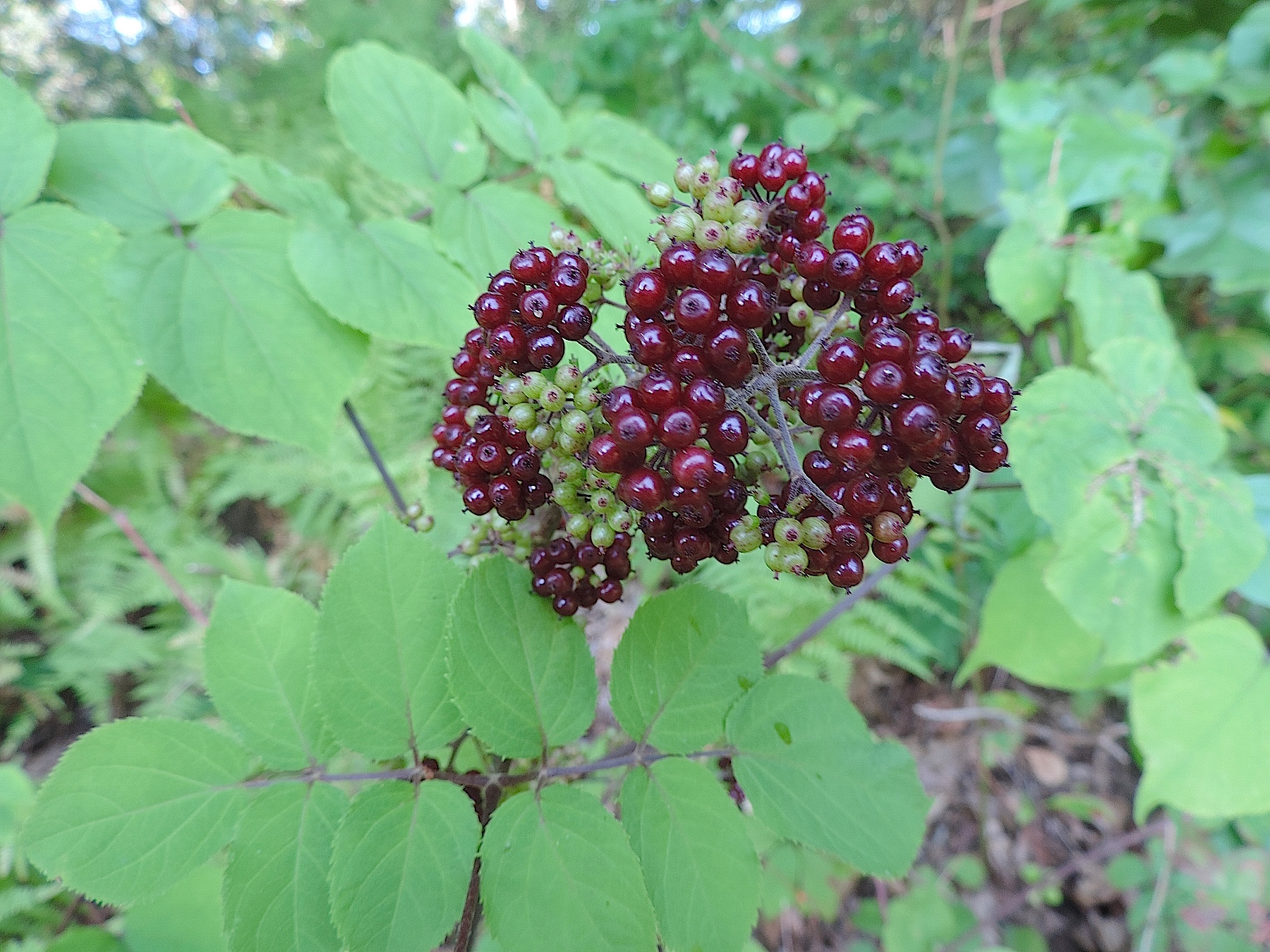
Here’s a plant worth knowing: American spikenard (Aralia racemosa).
The berries (botanically drupes) are pretty tasty… not too sweet, not too bitter. Having said that, you probably don’t want to sit down to a whole bowl of them. As a trail nibble though, they’re perfect.
American spikenard is in the same family as ginseng and wild sarsaparilla (Araliaceae), and is therefore reported to contain similar medicinal compounds (for example, saponins and ginsenosides, which demonstrate tonifying effects).
What else can we say about American spikenard? A study from 2009 found that an extract from its aerial parts demonstrated anti-tumor activity against breast tumor cells (Planta Medica 2009). A more recent study from 2011 found that extracts from the roots of American spikenard demonstrated analgesic (pain-reducing) activity… comparable to aspirin (Research Journal of Pharmacy and Technology 2011).
Pretty great, huh? Check out American spikenard on your next walk — the fruits will continue to ripen for several weeks.
(Photo taken in North Park, Allegheny County Pennsylvania)
Thanks to everyone who came out to the Wild Plants As Medicine workshop & summer foraging hike last Saturday in North Park! We couldn’t have asked for a better day. Stay tuned for many more!
If you’d like to know which plants can be found now in Western Pennsylvania (late summer/early fall), here’s a list of the species we discussed/found:
When: Saturday, August 22nd Where: North Park, Allegheny County Pennsylvania
Time: 1:00 – 4:00 PM
Investment: $45
I’m happy to announce that on Saturday, August 22nd, I will be leading the “Wild Plants As Medicine” Workshop & Summer Foraging Hike at North Park in Western Pennsylvania… and I would love for you to join me!
This time, we’ll be discussing how to develop a personalized medicinal strategy using the various wild plants of Pennsylvania… including the species growing in your backyard!
I’m so excited to be leading this event, as this is a topic that is more important today than ever before.
Why, you may be asking?
Well, this may come as no surprise to anyone, though what I’m about to say is worth acknowledging:
We don’t exactly live in “ideal” times anymore. Meaning…
Our air isn’t as clean as it used to be. (Air quality recently measured at Beaver Falls was among the worst 10 percent of the nation’s monitors; in Lawrenceville, it’s among the worst 25 percent in the nation.)
Our water isn’t as clean as it used to be. (A stream that feeds a water treatment plant in Greene County was recently found to contain 60 times the maximum amount of radiation allowed in drinking water. Yes, that’s 6-0.)
And our food certainly isn’t as clean as it used to be. (Glyphosate, anyone?)
Throw in a diet that typically lacks bitter (read: medicinal) flavors, and the outcomes don’t look so hot.
Diabetes, headaches, insomnia, arthritis, cancer, dementia, heart disease, influenza and other viral infections… is it any wonder that these illnesses plague the human species (and not squirrels, snapping turtles, or snakes)?
Perhaps you currently experience one or more of the above conditions, and you’re looking for alternatives to the medications typically prescribed to you.
(There are local wild plants that address all of those illnesses by the way… for free!)
Or, perhaps you currently feel pretty good, though you’d like to take immediate action right now to reduce your chances of experiencing any of the aforementioned illnesses somewhere down the line.
The solution?
“Everything you need is growing in your backyard.”
Ever hear that before?
Listen…
Organic food is great… though it’s not enough.
Non-GMO? Fantastic!… though it’s still not enough.
Local, sustainable, meditated on and blessed by the Dalai Lama himself … sorry to say, this still may not be enough.
You see, for optimal health… ya know, the kind of health that beams outward from the depths of one’s 5-carbon sugared backbone we typically refer to as DNA… Homo sapiens require the wild medicines from the landscape.
And, I’d love to show you how to make it all happen in this 2-part event on August 22nd!
The first part will feature a presentation on personalizing a medicinal strategy using the wild plants of Pennsylvania. We will also begin the process of making a medicinal tincture, which can be taken home for you to finish (sorry, no alcohol allowed in this park!). Part 2 will include a hike in the park as we identify and discuss late summer edible and medicinal plants and mushrooms.
By attending this program, you will learn:
The importance of developing a medicinal strategy based on wild plants
Medicinal benefits of specific wild plants, supported by research
How to make wild plant infusions
How to make tinctures
Wild plant field identification
Wild plant nutrition
Plant harvesting methods
Latin nomenclature
… and much more!
Each participant will receive the starting materials for a wild plant extraction (which we will start in the workshop), as well as an e-book with notes from the workshop, summer medicinal plant descriptions, medicine-making instructions, and more!
This program will entail light to moderate hiking, and will take place rain or shine. Please note that in order to maximize your learning experience, space is limited and registration with payment in advance is required to secure your spot. The exact class meeting location will be provided upon registration.
To register: Please email Adam at adamharitan@gmail.com
Come enjoy an eventful mid-summer’s day in a beautiful park with a great group of foragers! We look forward to seeing you there!
Foraging for food in the supermarket is just a bit different from foraging for food in the wild, wouldn’t you say?
While both scenarios present a set of challenges (in the supermarket: beating the weekend rush, using coupons before their expiration dates, enduring the dreadful parking lots, etc.), wild food foraging may be known to pose the more immediate threats (misidentification, embracing the elements of nature, etc.).
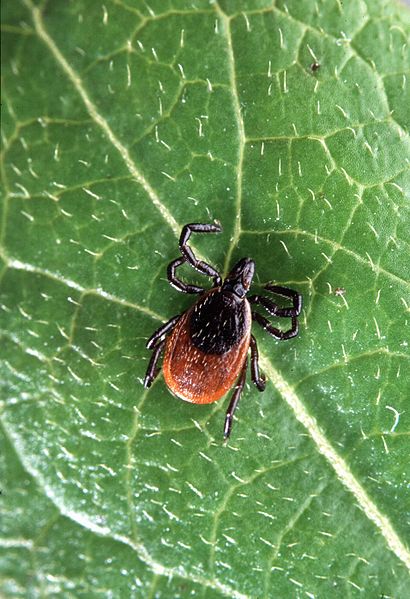
One of the challenges of being a wild food enthusiast in Pennsylvania is exposure to ticks. These small arachnids, particularly the deer ticks (i.e. blacklegged ticks), are no small threats, as they are vectors for illnesses including Lyme disease, ehrlichiosis, and anaplasmosis.
Typical precautionary measures include wearing long sleeved pants and shirts, wearing light colored clothing to easily spot the presence of ticks, and using repellents.
With all this rain we’ve been experiencing in Western Pennsylvania, foraging for mushrooms has never been easier.
Pictured above is a choice edible mushroom that can be found now under hardwood trees. Key distinguishing characteristics:
•lots of milky latex when bruised
•this milky latex stains hands brown (sometimes faintly)
•this milky latex stains envelopes faintly brown (I tested this)
•the gills, which are close together, stain brown when bruised
• a”fishy” smell to the latex, though a bit sweet
Look-alikes include Lactifluus corrugis and Lactifluus hygrophoroides, though if you witness the aforementioned characteristics, you’ve most likely got the voluminous-latex milky mushroom.
This blue-staining mushroom is fairly easy to identify: look for the dark red cap with the red, deeply reticulated (net-like) stem. This photograph wouldn’t be rated too highly by fungal photographers because it doesn’t show the underside, though the pore surface is red, it contains tiny yellow droplets of liquid when young, and it lacks gills.
So we have a red capped, red pored mushroom that stains blue. Maybe you’ve been told to stay away from these kinds of mushrooms, for some may be toxic. Well, that’s true. Some may be.
This one, however, is generally considered edible (some individuals may experience gastrointestinal distress). It has a rather strong mushroomy taste with acidic undertones. Some liken it to citrus. I ate a few caps last night with eggs (yes, eggs for dinner) and enjoyed the experience.
Look for them under hardwood trees, especially oaks… now through early autumn in Western Pennsylvania.
It’s great to see so many friends spotting the old man! July is a great month for finding this very easy to identify, non-gilled member of the bolete family (Strobilomyces sp.). The cap is especially wooly with an underside of grayish-black pores.
Some consider him a fine edible when young, others say he’s just not worth the effort. I side with the first group, and find that this mushroom, although a bit slimy, adds a nice hearty flavor to meals.
Look for old man of the woods near oak trees, as well as in coniferous woods in Western Pennsylvania. He’ll be around for a while.
Under the green canopy… just above the leaf litter… within the vicinity of colorful fungi — a unique wildflower can be found.
Hm… this one doesn’t look quite like the other wildflowers in nature though. Summer wildflowers are tall, stately, and colorful! This one is small, droopy, and white.
Let’s not jump to conclusions, however.
With common names like corpse plant and ghost plant, passersby get the sneaking suspicion that this species — most commonly known as Indian pipe, or Monotropa uniflora — deserves further exploration into its mystery.
I’ve been a fan of this wildflower for many years, looking forward to its appearance every summer in Pennsylvania. As I traverse the forests in search of chanterelles, boletes, and black trumpets, the Indian pipe plant stealthily, yet inevitably, reveals itself during my summer treks.
If you’re interested in learning more about this strange, yet beautiful summer plant, I encourage you to view a brand new video I created. In it, I address some of the most common questions and thoughts regarding the Indian pipe plant.
Check it out… perhaps it may become your new favorite summer wildflower…
I imagine that choosing a favorite mushroom is a bit like choosing a favorite child.
(“Who would it be, Mom?”)
Impossible to do! Why even ask such a silly question?
However, if I had to narrow down my selection of fungi to only a handful of desirable species, surely I could do that…
… and this one, the reishi mushroom (Ganoderma tsugae), would make the cut.
Why?
Okay… another difficult question, but I’ll try to answer.
Perhaps it’s the beauty to which I’m drawn, with its lacquered hues of yellows, oranges, and reds. Or maybe it’s the way this mushroom makes me feel internally, knowing that ample research exists to support its medicinal benefits.
Whatever the true reason, Ganoderma tsugae remains one of my favorite mushrooms to seek out and harvest, and I continue to be humbled — year after year — by its splendor.
If you are interested in learning more about the reishi mushroom, I encourage you to check out a brand new video I created.
In the video, I discuss the habitat, key identification characteristics, and medicinal benefits of this remarkable medicinal mushroom.
Enjoy! (And if you have a second, I’d love to know what you think!)
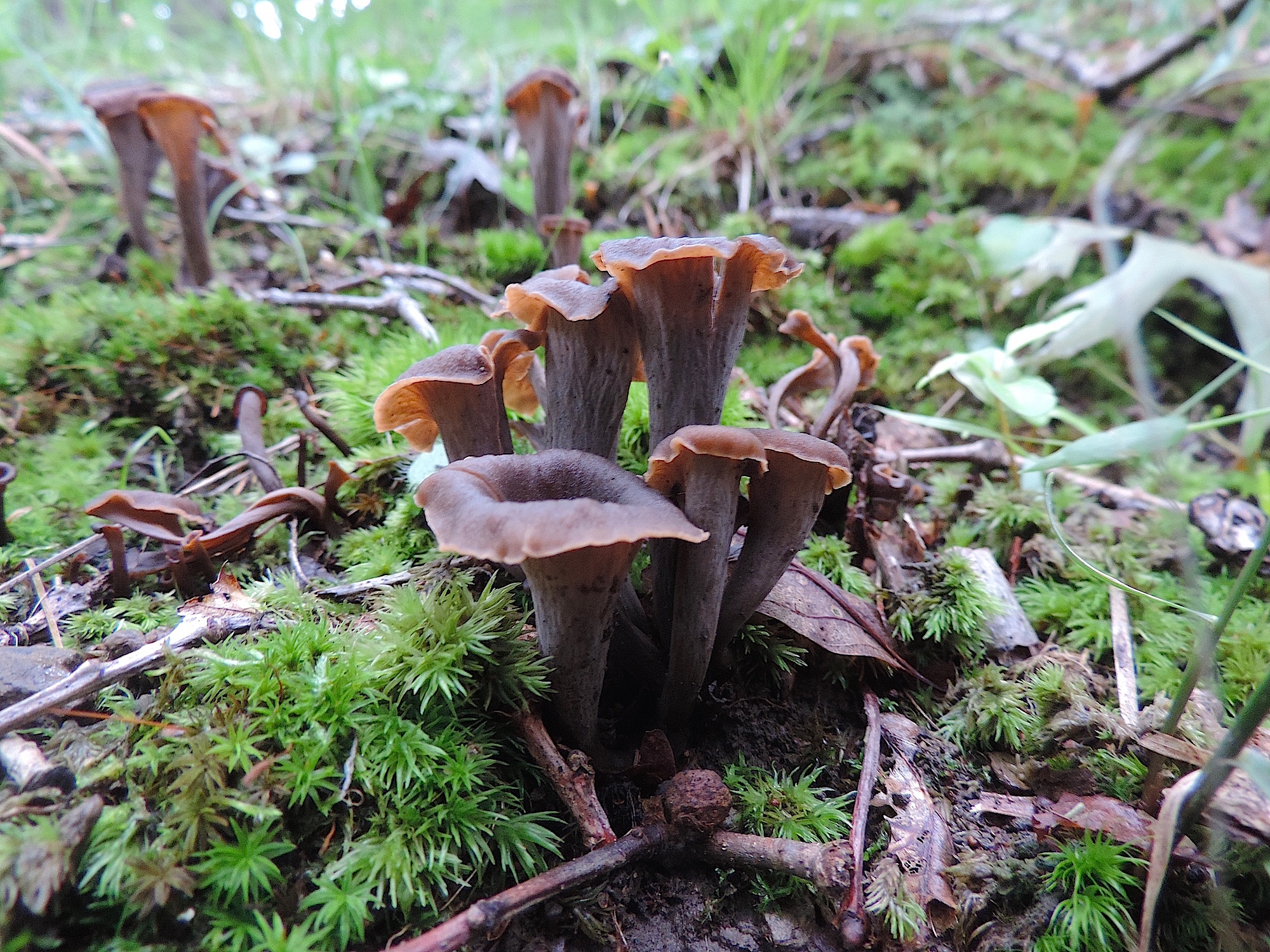
Plenty of rain = plenty of mushrooms. All kinds of mushrooms, too… including these black trumpets (Craterellus fallax), appearing now in Western Pennsylvania.
They’re delightfully edible, and if they’re anything like their close European relatives, Craterellus cornucopioides, they may contain biologically active vitamin B12.
Why is this important? Well, if one were to abstain from eating an entire kingdom of life — let’s say, Animalia — a B12 deficiency could be the result somewhere down the line. Why’s this? Well, vitamin B12 is generally concentrated in foods derived from animals, like meat, milk, eggs, fish, and shellfish.
A quick look at some nutrition labels may reveal the presence of vitamin B12 – for example, in the cyanobacterium sprirulina – however, what some foods actually contain is a biologically inactive form of B12, known as pseudo-B12. Vitamin B12 and pseudo-B12 are not the same; only the former is biologically active in the human body and therefore able to correct deficiencies.
Enter black trumpets: According to the Journal of Agricultural and Food Chemistry (2013), black trumpet (Craterellus cornucopioides) mushrooms contain considerable amounts of biologically active vitamin B12 (1.09−2.65 μg/100 g dry weight), and may improve vitamin levels in those experiencing deficiencies.
While this study analyzed the European species, perhaps its American relative (C. fallax, shown here) contains similar amounts of biologically active vitamin B12. Who knows? The research just isn’t there, but it’s fun to imagine…
Regardless, they still taste great with eggs (and those definitely contain active B12)!





 Foraging Pittsburgh